


Custom EHR/EMR Development in the USA: Features, Benefits, and Key Considerations

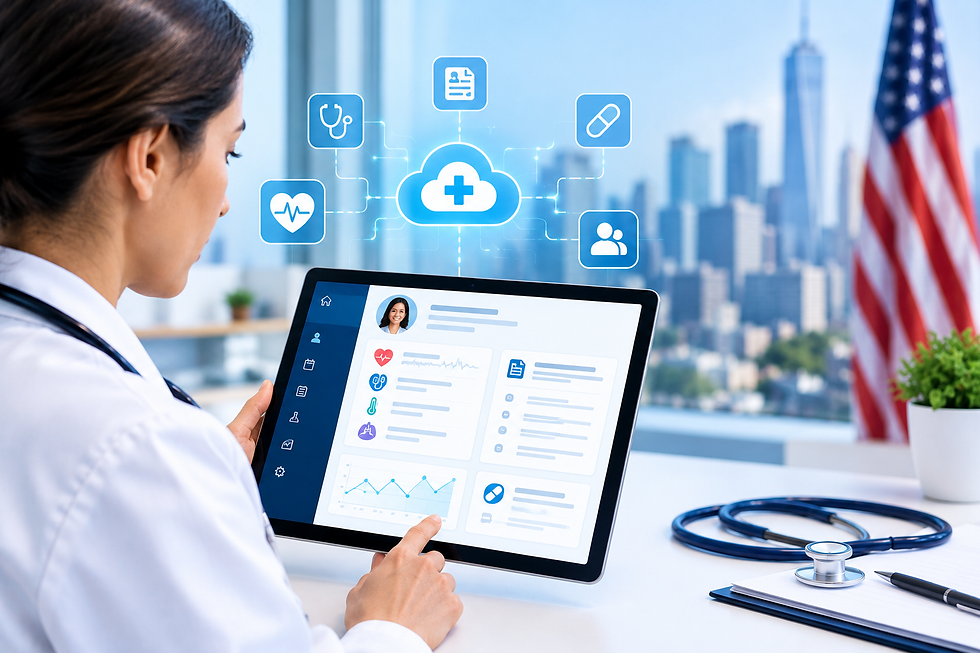
Digital transformation is reshaping healthcare delivery across the United States. Healthcare providers are increasingly investing in technology to simplify administrative tasks, improve access to patient information, and enhance coordination between medical teams. Custom EHR/EMR software is becoming an important part of this shift.
Unlike generic software solutions, custom EHR/EMR systems are developed around the specific workflows, integration requirements, and operational goals of healthcare organizations.
Why Healthcare Providers Need Custom EHR/EMR Software
Managing patient information across disconnected systems can create administrative challenges and make information sharing more difficult. Custom healthcare software helps organizations bring essential workflows into a more integrated digital environment.
Hospitals, clinics, and specialty practices can implement features that match their requirements, from patient registration and appointment scheduling to clinical documentation and billing.
A well-designed solution can also help healthcare professionals access relevant patient information more efficiently while reducing repetitive administrative work.
Essential Features of Custom EHR/EMR Solutions
Healthcare organizations should prioritize features that address their daily operational needs.
Digital Patient Records: Organize medical histories, diagnoses, medications, allergies, and treatment plans.
Appointment Management: Simplify scheduling, automated reminders, and follow-up coordination.
E-Prescription Support: Facilitate electronic prescription workflows through appropriate integrations.
Clinical Workflow Automation: Reduce manual processes related to documentation and routine administrative activities.
Interoperability: Support healthcare data exchange through standards such as HL7 and FHIR, depending on integration requirements.
Analytics and Reporting: Help administrators monitor operational performance and identify opportunities for improvement.
Security and Audit Trails: Implement access controls, encryption, activity logging, and other safeguards for sensitive health information.
Key Benefits for Healthcare Organizations
1. Streamlined clinical workflows
Custom EHR/EMR software can align digital processes with existing clinical practices, helping medical teams manage documentation and administrative tasks more efficiently.
2. Improved patient information management
Centralized records can make relevant information easier for authorized healthcare professionals to access, supporting continuity of care.
3. Flexible and scalable architecture
Healthcare organizations can expand their systems as patient volumes increase, new departments open, or operational requirements change.
4. Better system integration
Connecting EHR/EMR platforms with laboratory systems, pharmacy applications, billing software, and other healthcare tools can reduce data silos and duplicate entry.
5. Stronger privacy and security practices
Solutions designed for the US healthcare market should address applicable HIPAA requirements and incorporate appropriate safeguards for protecting sensitive patient information.
What to Consider Before Developing an EHR/EMR System
Successful development starts with clear requirements. Healthcare providers should identify their target users, essential modules, integration needs, data migration requirements, and expected future growth.
Other important considerations include development costs, implementation timelines, staff training, system maintenance, and ongoing security updates. Organizations should also evaluate the vendor's healthcare technology experience and approach to interoperability and compliance.
A phased development strategy can help teams prioritize essential features, gather user feedback, and improve the solution over time.
Conclusion
Custom EHR/EMR software development enables healthcare organizations in the USA to create technology tailored to their clinical and administrative needs. With the right combination of usability, interoperability, scalability, and security, these solutions can support more efficient healthcare operations and better-managed patient information.
Seasia Infotech helps businesses explore custom software development approaches aligned with their technology and operational goals.


Comments